Phase One Treatment
Orthodontic treatment is often thought of as something that happens during the teenage years, but many children benefit from treatment at a younger age. Early orthodontic treatment, or Phase 1 treatment, involves assessing and addressing dental issues before they become more serious problems. This type of treatment can be especially helpful in guiding the development of a child’s mouth and jaw. We offer early orthodontic care as part of our orthodontic services.
When Should My Child See an Orthodontist?
The American Association of Orthodontists recommends that children have their first orthodontic visit by age 7. The first adult molars typically begin to come in at this age, and the orthodontist can assess whether any dental or jaw issues are developing. While your child may not need braces at this early stage, an orthodontist can identify early signs of problems such as crooked teeth, bite issues, or jaw misalignment.
What Are the Benefits of Early Treatment?
There are several reasons why early orthodontic treatment can be beneficial for children.
-
Correcting Bite Issues
Some children have bite problems, such as overbites, underbites, or crossbites, which can lead to difficulties with chewing, speaking, and breathing. These problems can also cause wear on teeth, jaw pain, and trouble with tooth eruption. Early treatment can help correct these bite problems, guiding the development of the teeth and jaw to ensure they align properly as the child grows. -
Creating Space for Permanent Teeth
If a child’s baby teeth don’t fall out at the right time, it can cause crowding and make it harder for permanent teeth to come in properly. Early orthodontic treatment can create space for adult teeth to come in correctly. This may involve removing certain baby teeth or using appliances like expanders to widen the jaw and make room for the new teeth. -
Reducing the Need for Future Treatment
Addressing issues early can often reduce the severity of problems later on. For example, early treatment might help avoid the need for extractions or more complicated procedures like jaw surgery in the future. By correcting dental and jaw issues while the child is still growing, the orthodontist can more easily guide the development of the teeth and jaws. This often leads to shorter and less expensive treatment down the road. -
Improving Self-Confidence
While orthodontic treatment at an early age focuses mostly on dental health, it can also help improve a child’s confidence. Some children may feel self-conscious about their appearance if they have crooked teeth or visible bite issues. Early treatment can help straighten teeth and improve the smile’s overall appearance, giving kids more confidence in social situations and at school.
What Happens After Early Treatment?
Once Phase 1 treatment is complete, the orthodontist will likely monitor your child’s progress. In some cases, they may need additional treatment later on as the child’s adult teeth continue to come in. Phase 2 treatment typically starts during the teen years. Patients often require it to finalize the alignment of the teeth and jaw.
Phase 2 treatment usually involves traditional braces or clear aligners to make final adjustments to the teeth. However, because of the early treatment, this phase is often shorter and less involved than it would have been if the issues had not been addressed during childhood.
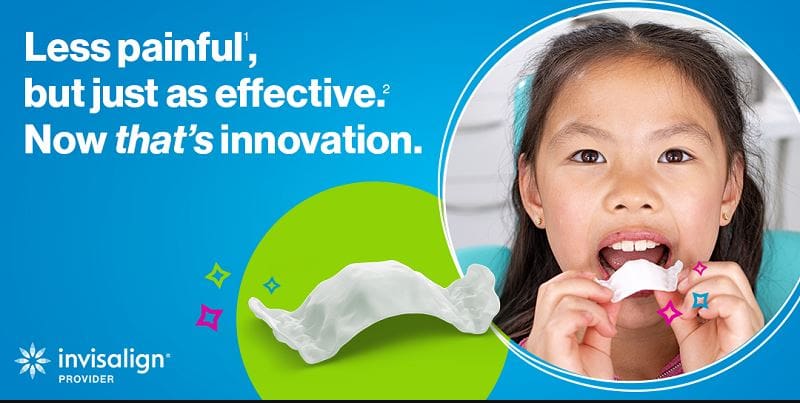
Meet the new Invisalign Palatal Expander System. Make room for adult teeth in kids 6-11 with an expander that is:
- Less painful than traditional palatal expanders1
- Clinically proven to be safe and effective2
- A revolutionary new design with no metal screw
Invisalign Palatal Expander vs. Traditional Expander
First introduced in the 1950s, traditional palatal expanders work by inserting a tiny key into a center hole and cranking the appliance wider daily. The process is difficult and stressful for kids and parents, so they created a better way. The Invisalign Palatal Expander is less painful than the traditional method but just as effective. It’s the only FDA-approved removable option as effective as traditional expanders.
The Invisalign Palatal Expander System uses a series of 3D-printed expanders that gradually widen to create space for adult teeth. It gives kids the orthodontic care they need without you having to manually crank open the expander every day. That means fewer tears, less anxiety, and a more positive overall experience.
Why Choose the Invisalign Palatal Expander?
Dr. Garlington was involved in the original pilot study for the Invisalign Palatal Expander. He played a huge role in developing this new, innovative technology.
- Say goodbye to daily screw turning
- Clinically proven to be safe and effective
- Removal for better hygiene
- Kid-Friendly! Easy to use for kids and parents
- No food restrictions
- Fewer emergency visits
Early Intervention Treatment FAQs
Early intervention treatment can make oral development easier. Below are the answers to some of the questions we get most frequently.
At what age should a child be evaluated for early orthodontic treatment?
Children should receive their first orthodontic evaluation around age seven. At this age, orthodontists can identify developing alignment and bite issues. Early detection allows for timely intervention. Not all children will need treatment, but early evaluation provides valuable insight.
Why is early orthodontic treatment important?
Early orthodontic treatment addresses problems while the jaw is still growing. This makes it easier to guide proper development. Treating issues early can prevent more severe complications. It often reduces treatment time and complexity later.
What problems can early intervention orthodontics address?
Early treatment can address crowding, crossbites, overbites, underbites, and jaw growth discrepancies. It can also help manage habits like thumb sucking. Identifying these issues early allows for effective correction. This proactive approach supports long-term oral health.
Does every child need early orthodontic treatment?
Not every child requires early intervention orthodontic treatment. Many children benefit from monitoring rather than immediate care. Orthodontists evaluate growth patterns and development. Treatment recommendations are individualized.
How long does early orthodontic treatment last?
Early intervention treatment typically lasts 6 to 18 months. Duration depends on the severity of the issue. After Phase One, a resting period may follow. Additional treatment may be needed later.
What happens after early orthodontic treatment is completed?
After early treatment, the orthodontist monitors growth and development. This observation phase allows permanent teeth to erupt. Phase Two treatment may be recommended during adolescence. Monitoring ensures continued progress.
Is early orthodontic treatment painful?
Early orthodontic treatment may cause mild discomfort initially. This typically resolves quickly as the child adjusts. Orthodontists use gentle techniques. Comfort is a priority throughout treatment.
Does insurance cover early orthodontic treatments?
Insurance coverage varies by plan. Some plans include early orthodontic benefits. Families should verify coverage. Financial planning may be necessary.
What role do parents play in early orthodontic treatment?
Parents support treatment by encouraging compliance. Monitoring appliance wear is important. Good communication with the orthodontist helps. Parental involvement improves success.
How does early intervention orthodontics support overall health?
Proper alignment improves chewing and digestion. Balanced bites reduce jaw strain. Oral health contributes to overall wellness. Early treatment supports healthy development.